
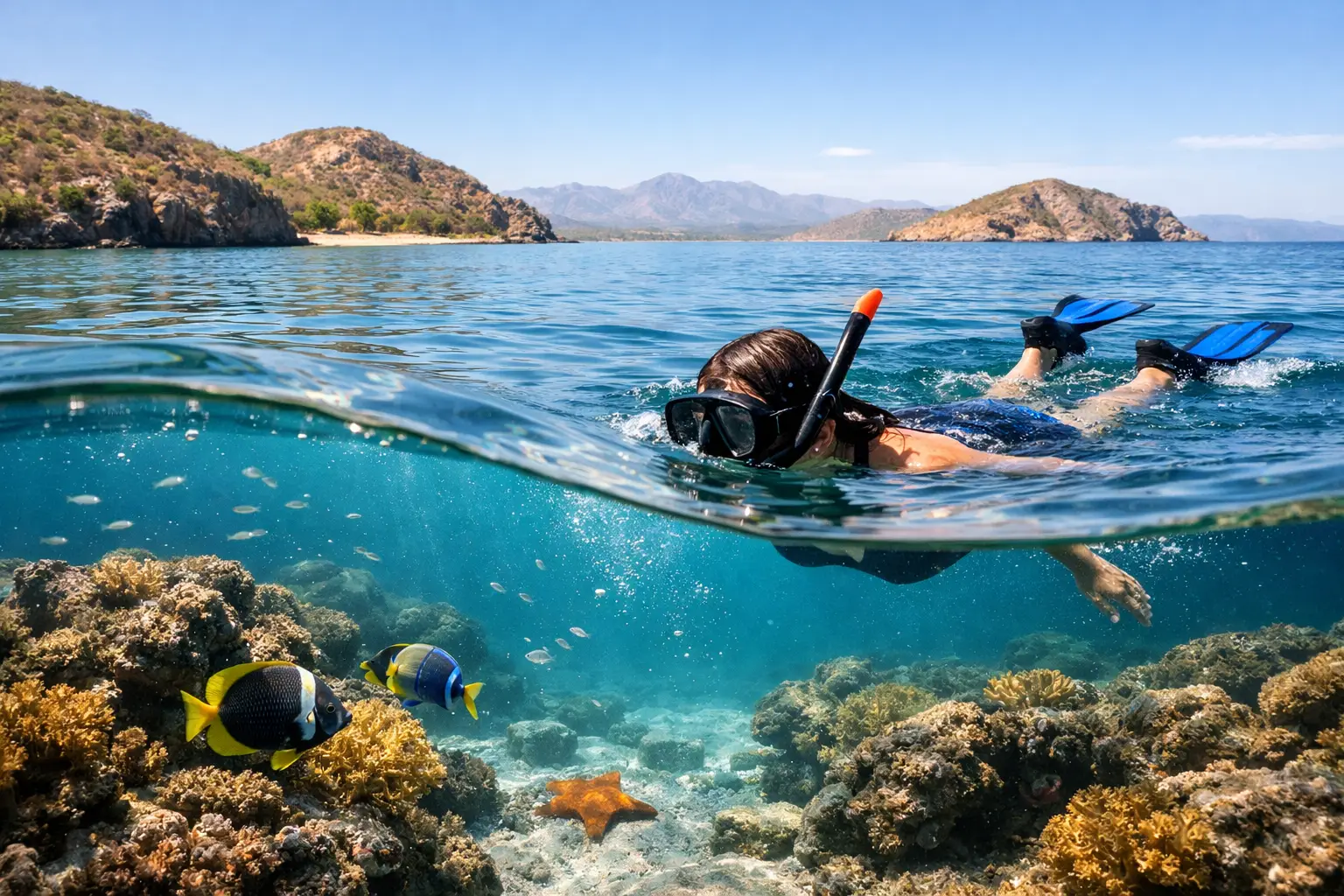
The water tells you pretty fast whether your beach day is about to be average or unforgettable. In Mulegé, the Sea of Cortez snorkeling guide you actually need is not about checking off famous names. It is about finding the right cove on the right day, showing up with the right gear, and getting in the water while everyone else is still deciding where to park.
If you are here for a few precious vacation days, that matters. You do not want to waste a calm morning hauling mismatched gear, guessing at conditions, or ending up at a beach that looks great from shore but turns murky once you put your mask on. The good news is that Mulegé gives you access to some seriously fun snorkeling when you keep it simple and local.
How to use this Sea of Cortez snorkeling guide
Think of snorkeling here less like a single destination and more like a moving target. Wind, tide, sunlight, and beach exposure can change your experience fast. A cove that feels perfect at 8:30 a.m. can be choppy by noon, while a beach that looked too breezy yesterday can turn glassy the next morning.
That is why the best plan is flexible. Start with protected water, aim for early hours, and let conditions shape your decision. If you are traveling with kids or first-timers, favor easy beach entries and calm, shallow zones. If your group is more confident in the water, you can stretch farther along rocky edges where fish life tends to be better.
The payoff is real. The Sea of Cortez can serve up clear water, reef structure, baitfish schools, rays, and color that surprises people who expected a quiet desert coast instead of a marine playground.
What makes Mulegé snorkeling worth your time
Mulegé sits in a sweet spot for travelers who want action without turning the whole day into a production. You can go from breakfast to beach to snorkel in a short window, which means less driving, less gear hassle, and more time in the water.
The variety helps too. Some nearby beaches are better for families and casual floating. Others reward a little more effort with rock formations, deeper blue water, and more marine life. That mix is great for couples, friend groups, and families with mixed energy levels because not everyone wants the same kind of adventure every day.
There is also a practical advantage that seasoned travelers appreciate right away. You do not need to own or pack everything to have a strong day out here. Getting the gear locally means you can travel lighter and still show up ready to move.
Best conditions for snorkeling in the Sea of Cortez
If you remember one thing from this Sea of Cortez snorkeling guide, make it this: morning usually wins. Earlier hours often bring calmer winds, better visibility, and a more relaxed setup at the beach. By afternoon, even a beautiful spot can get a little rougher or busier.
Sun angle matters more than people expect. Bright overhead light helps visibility, especially over sand-and-rock bottoms where fish can blend in when the light is low. Clear, sunny days often give you the best look into the water, but even then, local wind is the deal-breaker.
Protected coves are your friend when the breeze picks up. Open beaches can look inviting from the road, but once small chop starts bouncing light off the surface, visibility drops. If the water looks textured, silty, or whitecapped, save yourself the frustration and pivot.
Seasonally, conditions can vary. Some days are built for easy floating and crystal-clear views. Others are better for paddling, beach lounging, or exploring by shore. The smart move is not forcing a plan that the water is clearly rejecting.
Where to look once you get in the water
Beginners often head straight out, but the best snorkeling is not always in the deepest water. In many Sea of Cortez spots, the action starts along rocky edges, reef patches, and transitions where sand meets stone. That is where fish find cover and food.
Move slowly. Pause often. Let the water settle around you. A lot of marine life appears once you stop kicking hard and start drifting. Sergeant majors, reef fish, rays, and the occasional larger surprise can all show up when you give the place a minute.
Keep your expectations realistic and your eyes open. Not every session is a wildlife documentary. Some days the magic is the clarity, the light, and the feeling of gliding above structure in water so calm it barely feels real.
Gear that makes the day easier
Good snorkeling is part location and part logistics. A leaking mask or fins that fight you can turn a promising morning into a short, annoying one. Fit matters more than fancy features.
Your mask should seal comfortably without cranking the strap too tight. Fins should feel secure but not punishing. If you are bringing kids or sharing gear in a group, sizing becomes even more important because frustration spreads fast when someone is uncomfortable five minutes in.
A flotation option can be a game changer for nervous swimmers or relaxed family sessions. So can a dry bag if your crew wants to keep keys, phones, and towels organized while moving between beach setups. And if you want the memories to last longer than the sunburn, an action camera is worth considering in clear conditions.
For travelers who want to stop watching and start doing, renting locally is usually the easiest move. You skip the airline baggage circus, avoid buying cheap gear you will use once, and get equipment that actually fits the day you have planned.
Safety without killing the vibe
The Sea of Cortez is fun, but it still rewards common sense. Always look at water movement before you suit up. If entry and exit look awkward, if waves are pushing hard against rock, or if visibility is poor, that is your sign to change plans.
Snorkel with a buddy whenever possible. Even strong swimmers can get tired faster than expected when they are excited, underhydrated, or staying out longer than planned. If you are with kids, keep them close and choose mellow water over ambitious scenery.
Sun exposure sneaks up on people here. The combination of desert heat and reflected light off the water can cook you faster than you think. Rash guards, water, shade, and breaks on shore keep the day fun instead of fried.
Marine life deserves space too. Look, float, enjoy, but do not chase, grab, stand on rock or coral, or try to force a closer encounter. Better snorkeling comes from moving through the water like a guest, not a wrecking ball.
Planning for couples, families, and groups
The best beach days usually mix activities. One person wants to snorkel for an hour. Someone else wants to paddle. The kids want float time. Another friend wants shade, snacks, and a camera. That is normal, and Mulegé is a great place to build around it instead of arguing about a single plan.
Couples can keep it simple with a calm morning snorkel and a slow beach setup that leaves room for lounging later. Families do better when the beach has easy access, shade, and backup fun once attention spans shift. Friend groups usually get the most out of combining snorkel gear with something else active, like kayaks or paddle boards, so the day can stretch into cove hopping instead of staying in one spot.
This is where local support makes a real difference. Mulegé Madness helps visitors get outfitted for the kind of day they actually want, with online reservations, beach delivery options, and gear that turns a maybe into a plan.
A few local mindset tips that go a long way
Do not chase the most crowded recommendation just because it is the loudest one. A quieter beach with better conditions will beat a popular spot with wind every time.
Do not overpack your schedule. Snorkeling is better when you leave room for one extra swim, one more drift along the rocks, or a last-minute change to a calmer cove.
And do not wait too long to get going. In Mulegé, some of the best water of the day happens before the beach scene fully wakes up. That is your window.
The Sea of Cortez rewards people who show up ready, stay flexible, and get in the water. If your vacation goal is more than sitting on the sand and calling it a day, this is your sign to grab the gear, pick your beach, and make the morning count.