
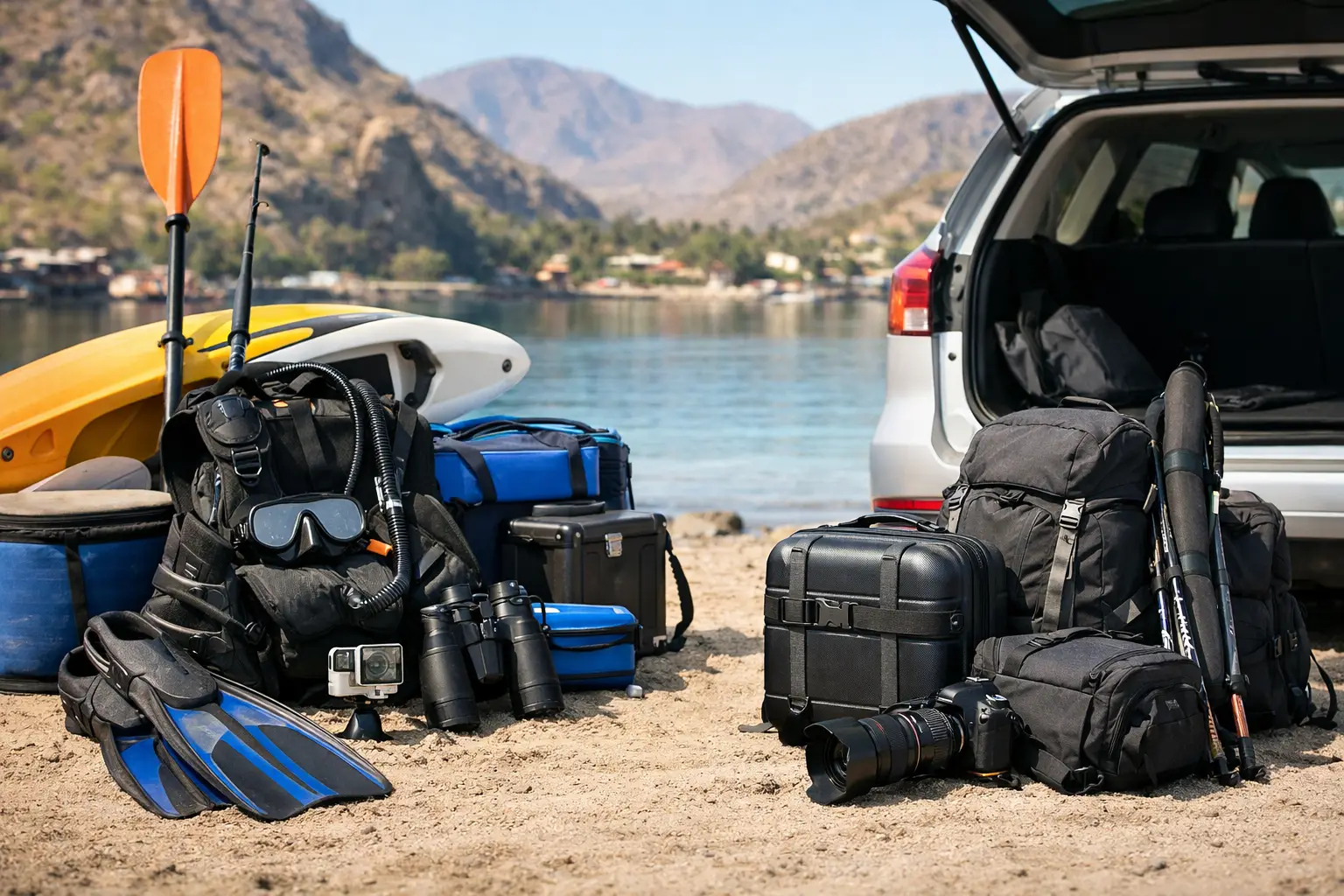
You can spot the difference at the beach in about five minutes. One group is already on the water, paddling toward a quiet cove with a cooler stashed and a camera rolling. The other is still wrestling straps, checking damaged fins, and wondering whether hauling everything down was worth it. That is the real question behind renting gear vs bringing equipment. It is not just about money. It is about how much vacation time you want to spend managing stuff instead of using it.
For most travelers coming to Mulegé, the smartest choice depends on three things – how far you are traveling, what kind of adventure you want, and how much hassle you are willing to carry with you. If your goal is to show up, get out on the Sea of Cortez, and make the most of a short trip, renting often wins by a wide margin. If you are deeply attached to specialized gear and plan to use it constantly, bringing your own can still make sense. The best answer is not one-size-fits-all.
Renting gear vs bringing equipment: what really matters
The first thing people usually compare is cost. That makes sense, but it can be misleading. Bringing your own paddle board, snorkel kit, drone, or beach setup may feel free because you already own it. But once you factor in baggage fees, oversized item charges, wear and tear, extra packing time, and the simple pain of moving bulky gear through airports or long road trips, that “free” option starts getting expensive.
Renting shifts the math. You pay for access when you need it, then hand it back and move on. For travelers who are only in Mulegé for a few days, that often means spending less overall while getting exactly what fits the day. A paddle board one morning, snorkel gear in the afternoon, a canopy and float chairs the next day – you are not locked into one setup because it is what fit in your car.
Convenience matters just as much. Vacation has a short runway. Every hour spent packing, unloading, cleaning, inflating, drying, or securing equipment is an hour you are not out exploring hidden beaches or slipping into clear water with your family. Renting removes a lot of that friction. When gear is ready, local, and matched to the conditions, the trip feels lighter from the start.
Then there is quality and fit for location. Good local rental operators know what works here. They know which gear holds up best in local conditions, what is practical for beginners, and what makes a better day for families versus more active groups. That local angle can be worth more than people expect, especially if you are visiting Mulegé for the first time and want to stop watching and start doing.
When bringing your own equipment makes sense
There are times when bringing your own gear is the right move. If you use highly specialized equipment and know exactly how you like it set up, your own gear can be hard to beat. Some experienced paddlers, divers, and photographers simply perform better with familiar equipment. If you are planning a long stay and using the same item almost every day, owning and transporting it may pencil out.
Bringing your own can also make sense if your trip is built around one core activity. Maybe you are road-tripping with room to spare and your kayak setup is already dialed in. Maybe your snorkel mask is prescription fitted. Maybe your drone settings are customized and you trust your own batteries and workflow. In those cases, familiarity can be part of the fun.
Still, there are trade-offs. Once you bring it, you are responsible for all of it. That means packing it correctly, protecting it in transit, storing it safely, cleaning it, and fixing problems if something goes wrong. A cracked buckle or forgotten charger is now your problem on vacation. That can be manageable for some travelers, but it is rarely the carefree option.
Why renting often wins in Mulegé
Mulegé is the kind of place that rewards flexibility. You may start the day wanting to paddle and end it snorkeling in calm water. You may plan a beach afternoon, then realize a canopy and chairs would make it much better. You may not think you need an action camera until you see the color of the water and decide this is the day to capture it.
That is where rentals shine. You match the gear to the moment instead of forcing the day around whatever you managed to haul with you. It keeps your travel lighter and your options wider.
It also helps with group trips. Families, couples, and friend groups usually do not all want the same activity at the same time. One person wants a paddle board, another wants a float mat, somebody wants snorkel gear, and someone else just wants shade and a great setup on the sand. Renting lets everyone build their own version of a good day without overpacking the car or buying a pile of gear you may barely use again.
This is especially true for air travelers. Airlines are not kind to oversized adventure gear, and even standard beach equipment adds bulk fast. Fins, masks, pumps, waterproof cases, life jackets, camera accessories, sun shelters – it stacks up. By the time you account for luggage limits and the awkwardness of moving it all, renting starts to look less like an added expense and more like a travel upgrade.
The hidden costs people forget
The biggest mistake in the renting gear vs bringing equipment debate is focusing only on the rental price. The real comparison should include time, stress, storage, and flexibility.
Time is the big one. Short vacations make every delay feel larger. If it takes an extra hour to unload your gear, another hour to clean and dry it, and more time figuring out where to store it overnight, you are paying for that with the best part of your trip.
Stress is another hidden cost. Travelers already juggle enough – directions, meals, weather, kids, schedules, and limited daylight. Adding expensive or fragile equipment to the mix can turn a fun day into a logistics exercise.
Storage is easy to ignore until you are in a smaller rental car or a vacation stay with limited space. Wet gear, sandy gear, and bulky gear all take up more room than expected. So do worries about theft, damage, and keeping batteries charged.
And flexibility may be the most valuable cost of all. When you rent, you can choose what fits the day’s weather, energy level, and group vibe. That freedom is hard to put a dollar amount on, but it often makes the trip better.
How to decide for your trip
If you are coming to Mulegé for a quick vacation, renting is usually the easy winner. It keeps your travel simple, gives you access to the right gear without bulk, and helps you spend more time on the water and less time organizing equipment.
If you are staying longer, driving in, and already own specialized gear you trust, bringing some of it might make sense. Even then, a mixed approach can work better than going all in. Bring the one or two items you really care about and rent the rest based on the day. That gives you familiarity without turning your vacation into a moving job.
Think about how often you will truly use each item. Think about how much room you have. Think about whether you want to commit to one activity or keep your days open. Most travelers are happier when they pack lighter and leave room for spontaneity.
That is one reason a local option like Mulegé Madness fits the way people actually vacation here. You can keep the trip easy, choose gear based on what sounds fun right now, and get moving without dragging your whole garage to the beach.
The best choice is the one that gets you out there
There is no badge for carrying more equipment. The goal is not to prove you packed like a pro. The goal is to have a better day in Mulegé.
If bringing your own setup gives you confidence and you will use it constantly, great. Bring it and go make the most of the water. But if hauling gear starts to crowd out the reason you came, it is worth changing strategy. Renting makes a lot of sense when convenience, variety, and vacation momentum matter more than ownership.
The smartest trips usually feel light. Less baggage, fewer decisions, more time outside. If that sounds like your kind of adventure, choose the option that gets your feet in the sand and your gear in the water faster.