You are halfway to the water, sunscreen on, cooler packed, and one question suddenly matters a lot: is beach rental equipment sanitized? It is a fair question, especially when you are renting snorkel gear, life jackets, chairs, or anything your family will touch all day. The good news is that many rental businesses do clean and sanitize equipment between uses. The real answer, though, depends on the type of gear, the condition of the equipment, and whether the company follows a consistent process instead of just giving things a quick rinse.
That distinction matters on vacation. You want to stop watching and start doing, not waste beach time wondering whether the mask, paddle, or canopy you rented is actually ready to use. A trustworthy beach rental experience should give you confidence before you ever step onto the sand.
Is beach rental equipment sanitized before each use?
Sometimes yes, sometimes not fully, and that is the honest answer. In beach towns, rental gear moves fast. During busy travel periods, equipment can go from one group to the next on the same day. Well-run operators build cleaning and sanitizing into that turnaround. Others may focus more on appearance than hygiene.
There is also a difference between cleaned and sanitized. Cleaned usually means sand, salt, sunscreen, and visible grime are removed. Sanitized means there is an extra step intended to reduce bacteria, germs, or residue on surfaces that people handle closely. If a rental company says equipment is cleaned, that is a good start, but it is reasonable to ask what that actually means for items that touch skin, faces, or mouths.
For travelers, the biggest concern is usually shared-contact gear. Snorkel masks, snorkels, SNUBA equipment, wearables, and life vests deserve more attention than something like a float mat or beach cart. Hard surfaces can often be disinfected more easily. Soft goods and straps may need more time, better products, and a more deliberate routine.
Which types of beach rental gear need the most sanitizing?
Not all rental gear carries the same level of concern. A kayak paddle is different from a snorkel mouthpiece, and families know that instinctively. Anything that goes near the face, mouth, or bare skin should be cleaned more carefully and more often.
Snorkel gear usually raises the most questions, for good reason. Masks sit directly on the face. Snorkels involve mouth contact. If the gear is high quality and properly maintained, sanitizing should be non-negotiable between renters. The same goes for SNUBA equipment and any wearable safety gear used by multiple people in a short period.
Life jackets and rash guards also deserve a closer look. They may not seem as personal as snorkel equipment, but they absorb sweat, sunscreen, saltwater, and body oils. A clean-looking vest is not always a freshly sanitized one. That does not mean you should avoid renting it. It just means you should ask better questions.
Beach chairs, canopies, pedal boats, paddle boards, kayaks, and float mats are usually more about surface cleaning and general maintenance. These items still should be wiped down and checked, but the hygiene standard is a little different from anything worn on the body or used near the mouth.
What a good sanitizing process looks like
A solid beach rental operation does not guess its way through cleaning. It has a routine. Gear comes back, gets inspected, gets cleaned with the right product for the material, dries properly, and is stored in a way that keeps it ready for the next guest.
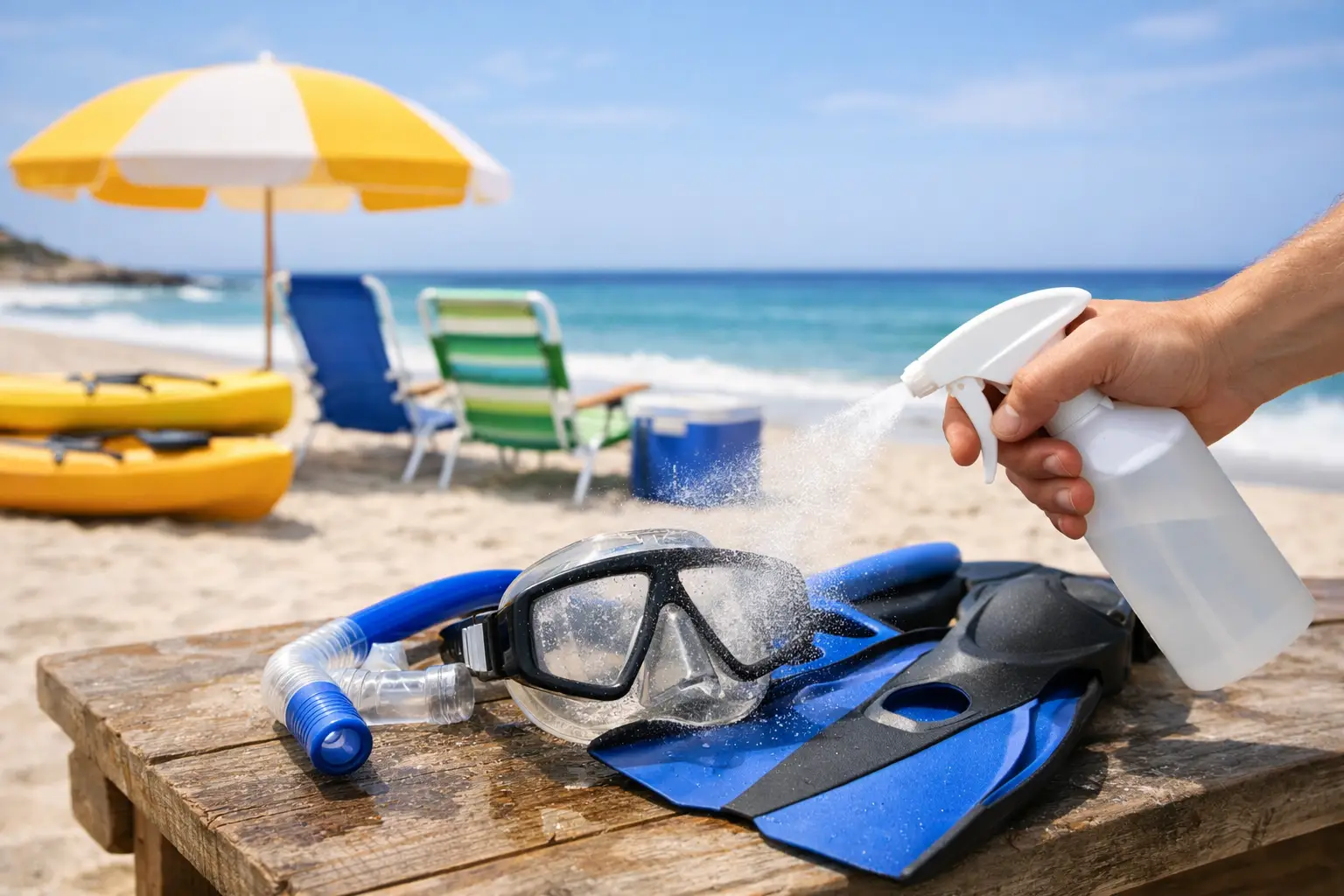
That process should include more than a freshwater rinse. Rinsing removes salt and sand, which is important for comfort and equipment life, but rinsing alone is not the same as sanitizing. For shared gear, especially masks, snorkels, and wearables, the company should be able to explain how items are treated between customers.
Drying matters too. Damp gear can hold odor and residue, and in some cases it can become less pleasant to use even if it was technically cleaned. A company that values guest experience usually pays attention to the little things – fresh-smelling vests, clear lenses, straps in good shape, and no sticky sunscreen film left behind.
Inspection is another sign of professionalism. Sanitizing is only part of the story. Equipment should also be checked for cracks, worn buckles, frayed straps, rough edges, and performance issues. Clean gear that does not work properly can still ruin a beach day.
How to tell if a rental company takes hygiene seriously
You usually do not need a long checklist. A few direct questions can tell you a lot. Ask whether gear is sanitized between rentals, especially shared-contact items. Ask how snorkel gear is handled after each use. Ask whether life jackets and wearables are washed and dried before being rented again.
The way the company answers matters almost as much as the answer itself. Clear, confident responses usually signal a real process. Vague phrases like “we spray things off” or “everything is cleaned regularly” leave too much room for guesswork.
Visual signs help too. Equipment should look organized, not tossed into a pile. Masks should have clear lenses. Snorkels should not smell musty. Life jackets should not feel grimy or sun-baked beyond recognition. Chairs and canopies should be free of obvious residue and mildew. When a business cares for its gear, it tends to show.
This is where local service makes a difference. A company that works closely with visitors, delivers gear, and depends on repeat word-of-mouth usually has more incentive to keep standards high. In a place built on unforgettable days on the Sea of Cortez, trust is part of the experience.
Why sanitizing matters, but maintenance matters too
It is easy to focus only on sanitizing because it feels immediate. But vacation gear should also be comfortable, reliable, and ready for action. A sanitized snorkel mask that leaks is still a bad rental. A wiped-down paddle board with a damaged fin is still a problem. A clean canopy that is missing hardware can still leave you fighting wind instead of enjoying the beach.
The best rental experiences combine hygiene with readiness. That means equipment should be clean, safe, and actually enjoyable to use. Families, couples, and friend groups are not renting gear to inspect it. They are renting it to chase clear water, hidden coves, and a full day outside.
That is why experienced travelers ask about both cleaning and condition. A good operator expects those questions and is ready for them.
What you can do as a renter
Even if a company has strong cleaning standards, a little personal caution is smart. Inspect your gear when it arrives or when you pick it up. If something looks off, speak up right away. It is much easier to swap equipment before you head down the beach than after the day gets moving.
For face-contact gear, some travelers feel better bringing a small personal item or two, such as their own snorkel mouthpiece if compatible, or wiping down certain surfaces themselves for extra peace of mind. That does not replace the company doing its job, but it can help if you are traveling with kids or anyone sensitive to shared gear.
You should also think about fit and comfort. Gear that fits correctly is more enjoyable and often more hygienic in practice because it sits where it should, instead of shifting around and collecting sand or rubbing uncomfortably. If a mask, vest, or wearable does not fit well, ask for another size.
Is beach rental equipment sanitized in Mulegé?
If you are renting gear in Mulegé, the better question is not only is beach rental equipment sanitized, but also who is handling the gear and how seriously they take your vacation time. In a destination where people come to paddle, snorkel, float, explore, and squeeze every drop out of a beach day, equipment prep should never feel like an afterthought.
A quality local provider understands that clean gear is part of the adventure. It helps you relax faster, get in the water sooner, and spend less time second-guessing the basics. Mulegé Madness, for example, is built around making beach days easier through convenient reservations, delivery options, and gear that helps visitors actually experience the coast instead of sitting on the sidelines.
If you are comparing rental options, look for businesses that treat cleanliness as part of service, not just a behind-the-scenes task. That usually leads to better-maintained gear, smoother handoffs, and a more confident start to the day.
A beach rental should feel simple: gear shows up ready, you grab your people, and the adventure begins. If a company can answer your sanitation questions clearly and back that up with well-kept equipment, you are probably in the right place. Then all that is left is to get out there and make the most of Mulegé while the water is calling.